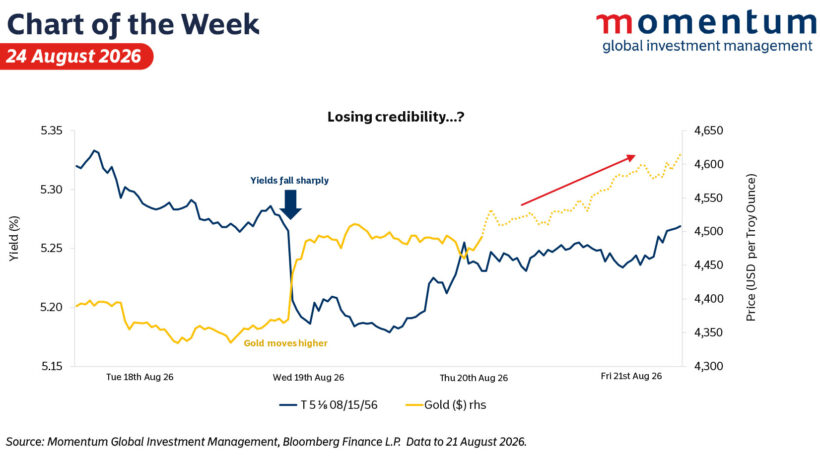
Momentum Chart of the Week – 20 April 2026
Middle East conflict triggers global oil shock, accelerating inflation pressures and weakening growth outlook across all major economies. Download PDF
7% income plus growth from $1 Billion AUM plus Top Quartile Global Equity Fund! _______ Download Momentum GF Global Equity Fund PDF Download Momentum GF Global Equity Fund Proposal PDF
The first quarter of 2026 marked a notable shift from the relatively supportive conditions seen through much of 2025. Markets entered the year with optimism, underpinned by easing monetary policy, improving global manufacturing data, and resilient corporate earnings. However, this constructive backdrop was increasingly challenged - and ultimately overshadowed -
Here is the NDL Fund Insight for April 2026. Download PDF
Global markets were dominated by a geopolitical energy shock from the US–Iran conflict, driving inflation risks, growth downgrades, and volatility, temporarily offset by a ceasefire-triggered risk rally, but leaving a fragile and uncertain macro outlook. Download PDF
Across all regions, the dominant macro driver is clear: Geopolitics → energy shock → inflation → tighter financial conditions Download PDF
Geopolitical tensions in the Middle East, particularly the Iran conflict and Strait of Hormuz risks, dominated markets and politics worldwide, driving energy price volatility, shaping economic policy, and overshadowing domestic macroeconomic trends. Download PDF
Two months in, two regimes decapitated. With ten calendar months remaining for 2026 one wonders if there aren’t a few leaders of some questionable regimes mulling over their options right now. It’s not possible to reflect on February without jumping straight to the last day of the month which saw
Geopolitical tensions in the Middle East, particularly the Iran conflict and Strait of Hormuz risks, dominated markets and politics worldwide, driving energy price volatility, shaping economic policy, and overshadowing domestic macroeconomic trends. Download PDF